Thailand National Semiconductor Strategy Playbook
Entry, Incentives & Positioning, 2026–2030: BOI A1+ Incentives, Eastern Economic Corridor Site Selection & Regional Competitive Positioning
Thailand approved its first national semiconductor and advanced-electronics strategy on 24 September 2026. This Playbook assesses where the country can genuinely compete between 2027 and 2030, anchored in real investments like Infineon's new Samut Prakan power-module facility and the Siam Silica workforce programme; how the BOI incentive and ownership rules actually work, and which projects are investable now versus those that should wait. Built for corporate development teams, institutional investors and investment-promotion bodies, it includes MSA's own proprietary frameworks (the MSA Project Filter and MSA Investor Decision Matrix) for testing whether a specific project should proceed now, wait, or be restructured.
Core Playbook US$36,000 · Core + Customisation US$46,000 · 10% early-commitment discount before 31 October 2026 · Licence details

Who This Is For
READERSHIPSemiconductor Investors & Site-Selection Teams
Chipmakers, OSAT and back-end assembly & test operators, and equipment suppliers evaluating Thailand entry and site selection.
Institutional Investors, PE & Family Offices
Capital allocators assessing BOI incentive economics, net-incentive modelling, and ownership/FBL structuring options.
Corporate Strategy Teams
Photonics, power semiconductor, and sensor/MEMS players mapping Thailand against Vietnam, Malaysia, the Philippines and Indonesia.
Government & Policy Readers
BOI, industrial estate authorities and trade bodies tracking implementation of the 24 September 2026 national strategy.
International Readers
Investors and corporates evaluating Southeast Asia semiconductor supply-chain reallocation from outside the region.
What's Inside
SELECTED CONTENTSKEY FIGURES
What Changed on 24 September 2026
Thailand's first national semiconductor strategy, the headline targets, and the three-phase roadmap to 2030.
Regional Competitive Positioning
Where Thailand should lead its pitch and where it should not compete head-on, scored against Malaysia, Vietnam, the Philippines and Indonesia.
Incentives & Investment Structuring
Current BOI architecture, the A1+ eligibility category, advanced packaging incentive treatment, and net incentive economics.
Location & Utility Readiness
A site-screening framework across the Eastern Economic Corridor's constituent estates, and utilities as an underappreciated investment variable.
The MSA Project Filter
A proprietary seven-question decision framework for testing whether a specific project should proceed, wait, or be restructured.
Report Preview
SAMPLE EXHIBIT · CLICK TO ENLARGE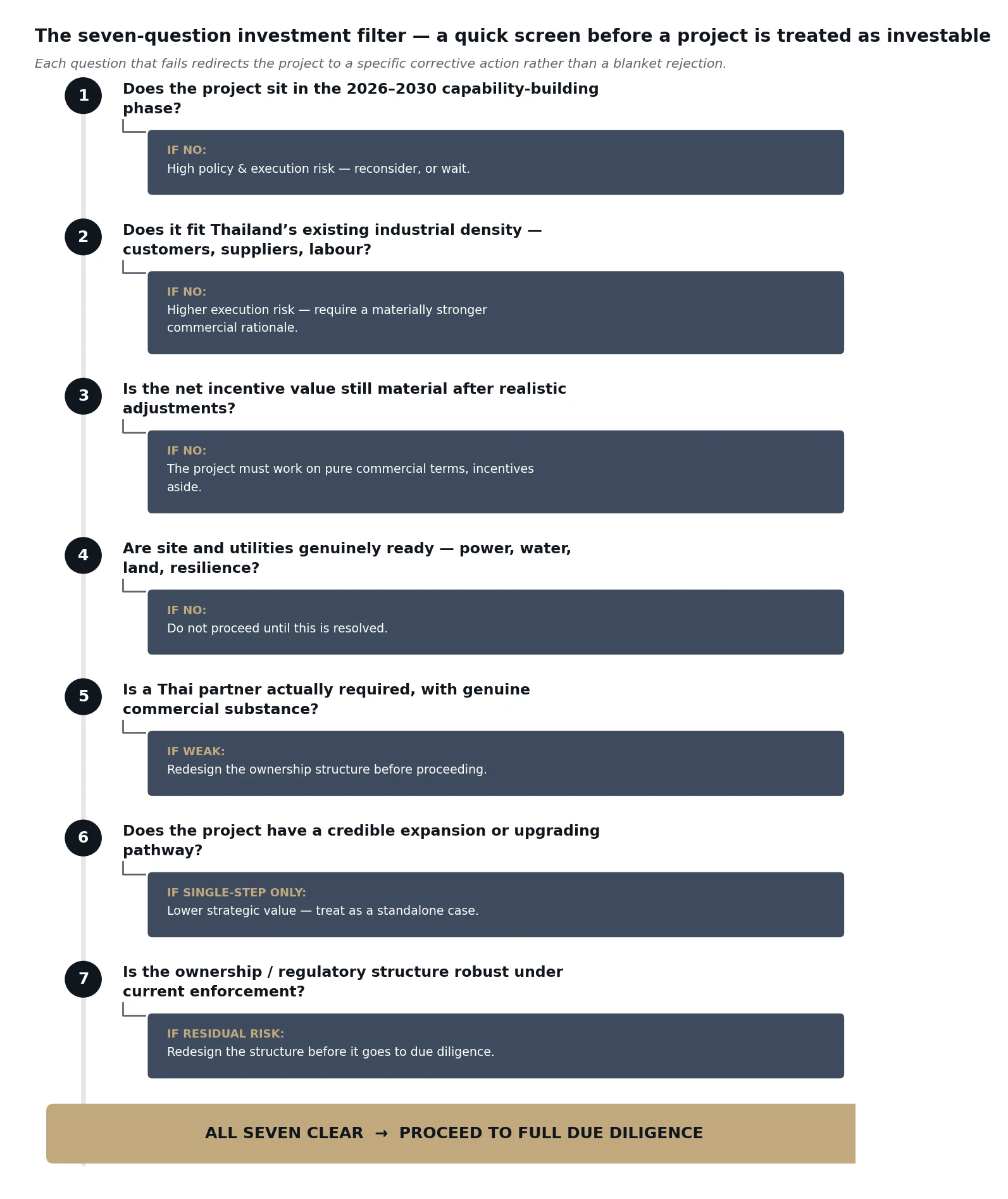
Exhibit 35, the MSA Project Filter decision tree, reproduced as it appears in the full report.
Institutional Licences
Licensed per organisation for internal use by the purchasing organisation and its controlled affiliates. Invoiced against a Purchase Order: 50% on engagement, 50% on delivery. Proposals are issued in writing by email.
- Final PDF and editable source files
- Full appendices A–H
- Evidence status matrix
- Purchase Order accepted
advisory@matthews.asia
- Everything in Core Playbook
- One module of your choice: site shortlist, ownership / FBL structuring paper, net-incentive model, or competitor map
- Further modules at the add-on prices below
advisory@matthews.asia
- Quarterly written implementation updates for 12 months
- Email Q&A on each update
- Policy and incentive changes tracked as they publish
advisory@matthews.asia
Optional add-ons: project-specific net-incentive model (Excel) US$6,500 · site and utility readiness memo (3–5 estates) US$8,000 · ownership / FBL structuring options paper US$7,000 · half-day investment-committee workshop US$10,000. Early-commitment discount of 10% on engagements signed before 31 October 2026. All prices in US dollars.
Need advisory support alongside this report? See our engagement options
About MSA Research
MSA RESEARCHWhy MSA
- Independent publisher, not sell-side. MSA holds no brokerage, leasing or valuation mandate on the markets it covers. The analysis is not linked to a transaction outcome.
- Evidence-tiered. Every claim is sourced and labelled by evidence strength: verified, corroborated, or intelligence gap. How we verify →
- Institutional-grade. Built to the same design and rigour standard across MSA's entire research library.
MSA Research, Matthews Strategic Advisory, Hong Kong
Southeast Asia · Greater Mekong · Greater China
Not Legal or Financial Advice
This report is independent strategic and policy analysis, not legal, tax, investment or financial advice. All figures should be independently verified before any capital allocation or policy decision.
Frequently Asked Questions
FAQWho is this report for?
Semiconductor investors and site-selection teams, institutional investors, PE funds and family offices, corporate strategy teams in photonics, power semiconductor and sensor/MEMS segments, government and policy readers, and international readers evaluating Southeast Asia supply-chain reallocation.
How do I access this report?
Licences start at US$36,000 for the Core Playbook and US$46,000 with one customised module, invoiced against a Purchase Order. Email advisory@matthews.asia for a written proposal.
Does it include the 24 September 2026 national semiconductor strategy announcement?
Yes. This edition is fully revised to incorporate the announcement, including the headline targets and the three-phase roadmap to 2030.
What BOI incentives and eligibility categories does the report cover?
The current BOI architecture, the A1+ eligibility category, the best-available evidence on advanced packaging incentive treatment, and project-level net incentive economics modelling.
How does Thailand compare to Vietnam, Malaysia, the Philippines and Indonesia for semiconductor investment?
The report scores Thailand against all four by activity rather than by country alone, identifying where Thailand should lead its pitch and where it should not compete head-on, including a dedicated regional competitive scorecard.
Which Thailand locations does the report cover for semiconductor site selection?
The Eastern Economic Corridor and its constituent estates (Samut Prakan, Rayong, Chonburi, Chachoengsao, Ayutthaya and Pathum Thani), assessed against a location and utility-readiness screening framework.
Does the report cover Infineon's Samut Prakan facility and Thailand's semiconductor workforce programme?
Yes. Infineon's new power-module facility in Samut Prakan is used as a detailed case study throughout the report, and the national Siam Silica workforce programme is assessed directly against the talent requirements of advanced packaging, photonics and power-semiconductor projects.
Can government departments and institutions purchase via Purchase Order?
Yes. Government departments and institutions can procure via Purchase Order; contact advisory@matthews.asia to begin.
Related Research
CONTINUE EXPLORINGVietnam Commercial Architecture 2027
Vietnam's own commercial and regulatory architecture, the market this report's regional positioning explicitly benchmarks against.
Thailand Market Entry 2026
BOI, Foreign Business Licence and compliant structuring routes into Thailand: the companion read for the ownership and structuring questions this report raises in Sections 8–9.
The New Southeast Asian Production Map
ASEAN and China+1 manufacturing reallocation, the regional counterpart to this report's semiconductor-specific supply-chain analysis.
Regional Risk and Opportunity Briefing
Macro, political and sector risk across Southeast Asia and Greater China, useful context for semiconductor investors weighing Thailand against regional alternatives.
License the Thailand National Semiconductor Strategy Playbook
Institutional, Government, Investment Firm and Bespoke Advisory access, invoiced against a Purchase Order.
Get notified of new reports
A short email when a new MSA report publishes. No spam, unsubscribe anytime.
By signing up you agree to our Privacy Policy.